
Why Small Forest Patches Matter: The Quiet Work of Conservation in Belihuloya

Conservation is often imagined at a grand scale: national parks, protected forests, wildlife corridors and vast landscapes. But some of the most important work can happen in places that look small on a map.

In Belihuloya, a biodiversity assessment of an undisturbed 5.8-acre forest patch along the Nonperiyal Estate Road recorded an extraordinary range of life. The study documented 80 bird species, including 15 endemics; 53 butterfly species, including six endemics; 12 reptiles, including nine endemics; seven amphibians, including five endemics; three land snail species, all endemic; 13 mammals, including five endemics; and 60 flora species, including eight endemics.

A Small Patch, A Large Ecological Role

The size of a forest patch does not necessarily determine its ecological value. A relatively small area can provide food, shelter, breeding sites and movement opportunities for a surprisingly large number of species.

This is particularly important in landscapes where natural habitats have become fragmented. When forests are divided into smaller pieces by roads, agriculture, development or other forms of land use, species can become isolated and movement between habitats becomes more difficult.

The 5.8-acre assessment is therefore significant not simply because of the number of species recorded, but because it demonstrates what can remain within a small, relatively undisturbed patch.

Why Fragmentation Matters

A forest does not function as an isolated island. Species move between habitats in search of food, water, breeding sites and shelter. Some need larger territories, while others depend on very specific environmental conditions.

When natural areas become fragmented, those connections can weaken. A patch may remain green, but its relationship with surrounding habitats can change.

This is why conservation increasingly looks beyond individual protected areas and towards connected landscapes. Corridors, forest edges, streams and smaller habitat patches can all contribute to ecological connectivity.

Belihuloya and the Central Highlands

Belihuloya sits within the wider ecological landscape of Sri Lanka’s Central Highlands, a globally significant biodiversity hotspot recognised by UNESCO. The Central Highlands property includes the Peak Wilderness Protected Area, Horton Plains National Park and Knuckles Conservation Forest, and supports exceptional levels of endemic and threatened flora and fauna.

The existence of important biodiversity outside formal protected areas reinforces the need to think about conservation at a landscape scale.

Wildlife does not recognise administrative boundaries.

The quiet work of conservation is therefore not always about creating another protected area. Sometimes it is about keeping an existing forest patch intact, maintaining vegetation beside a stream or resisting unnecessary disturbance.

Where Treehouse Chalets Fits

A nature-focused hospitality property exists within this same wider landscape. At Treehouse Chalets, the goal is not to turn wildlife into a performance, but to allow guests to experience the biodiversity that already exists around them.

Resident naturalist-led bird walks, jungle hikes, night walks, camera trapping and the Junior Naturalist Programme encourage guests to understand the landscape rather than simply consume it.

That distinction matters.

If tourism is going to coexist with biodiversity, the landscape must remain valuable for wildlife first.

The Quiet Work of Leaving Things Alone

Conservation can sometimes look surprisingly uneventful.

A tree is left standing.

A forest patch is not cleared.

A stream remains undisturbed.

A pathway is managed carefully.

Wildlife is observed from a distance rather than approached.

There may be no dramatic moment to photograph, but these decisions can make the difference between a functioning habitat and a disappearing one.

Belihuloya’s small forest patches remind us that conservation is not only about protecting the spectacular. It is also about recognising the value of what may appear ordinary.

A few acres can hold dozens of species.

A stream can support an entire freshwater community.

A patch of trees can become part of a much larger ecological network.

Sometimes, the most meaningful thing we can do for a landscape is simply allow it to continue being what it already is.
The Tiny Giants of Belihuloya: Dragonflies, Damselflies and the Hidden Freshwater Life Around Us

Some of the most important wildlife in Belihuloya is small enough to overlook.

You may walk beside a stream and notice the mountains, the trees and the sound of flowing water.

But hovering just above the surface could be a dragonfly.

Clinging to vegetation could be a damselfly.

Beneath the water, an entirely different stage of life is unfolding.

These insects are easy to dismiss because of their size, yet dragonflies and damselflies can tell us a great deal about the health and diversity of freshwater environments.

A 2022 study of the odonate fauna of Belihuloya recorded 36 species, including 22 dragonflies and 14 damselflies. Ten of those species were endemic to Sri Lanka, while 12 were nationally threatened. Among them were the critically endangered Elattoneura centralis and the endangered Libellago greeni.

Small Insects, Important Indicators

Dragonflies and damselflies are closely connected to freshwater.

Their life cycles depend on water, and their presence can therefore provide useful information about the condition of aquatic habitats.

This makes them valuable indicator species.

When you begin paying attention to them, a stream stops being simply a beautiful feature of the landscape.

It becomes an ecosystem.

Water quality matters.

Vegetation matters.

The surrounding forest matters.

Even the structure of the habitat matters.

The Belihuloya study found differences in odonate communities between habitat types, with relatively low similarity between them. The researchers described these habitats as complementary for conservation planning. In other words, protecting only one type of habitat would not necessarily protect the full range of species found across the landscape.

That is an important lesson.

Biodiversity is rarely concentrated in one place.

The Hidden World Around Water

Walk beside a stream slowly and the landscape begins to change.

Dragonflies patrol small sections of water. Damselflies rest on vegetation. Other insects move around the banks. Frogs may be hidden among leaves. Aquatic organisms live beneath the surface.

What appears to be a simple stream is actually a complex system supporting many different forms of life.

This is one reason Belihuloya’s waterways are so important.

The area is shaped by water, from small streams and waterfalls to larger bodies such as Samanalawewa.

Water connects habitats.

It creates corridors.

It supports vegetation.

And it provides breeding environments for species that could not survive elsewhere.

Endemic Life Hiding in Plain Sight

One of the most fascinating aspects of the Belihuloya odonate study is the number of endemic species recorded.

Ten of the 36 species identified were endemic to Sri Lanka. Several were also nationally threatened, including Elattoneura centralis, classified as critically endangered, and Libellago greeni, classified as endangered.

These are not species that simply happen to pass through Sri Lanka.

They belong here.

Their entire global distribution is tied to the island.

That makes every suitable habitat important.

A small stream may not look significant on a map, but for a species dependent on that particular ecological environment, it can be essential.

Looking Closer at Belihuloya

This is where naturalist-led experiences can change the way people experience a destination.

At Treehouse Chalets, guests can explore the surrounding environment through naturalist-led bird walks, jungle hikes and the Junior Naturalist Programme. The latter introduces children to local flora, animals and birds while helping them understand the relationships that keep an ecosystem functioning.

That philosophy can extend to the smaller species too.

A dragonfly becomes more interesting when you understand why it is there.

A stream becomes more valuable when you realise what depends on it.

A patch of vegetation becomes something worth protecting when you understand the species it supports.

Nature interpretation does not necessarily make the landscape more complicated. It makes it more meaningful. Wildlife tourism often focuses on large and charismatic animals.

Elephants, Leopards, Deer and Birds of prey.

But ecosystems are held together by countless smaller organisms that rarely make it into photographs. Dragonflies and damselflies are part of that hidden layer. They are small, but their presence can reveal something much bigger about the landscape.

Belihuloya’s odonate diversity is therefore more than an interesting scientific statistic.

It is another piece of evidence showing that the area contains a complex network of habitats worth understanding and protecting. The next time you walk beside a stream in Belihuloya, look down.

Then look closely.

There may be an entire freshwater world moving around you.

Belihuloya: Sri Lanka’s Hidden Biodiversity Crossroads

Belihuloya is often described through its mountains, waterfalls, misty mornings and quiet roads. But beneath that familiar landscape is something far more significant. Belihuloya sits within a biogeographical transition zone in south-central Sri Lanka, bringing together different habitats and ecological conditions within a relatively small area.

This makes it an interesting place not only for travellers, but also for anyone interested in biodiversity.

A 2019 study examining bird diversity across different land-use types in Belihuloya recorded 2,142 observations representing 106 bird species across 44 families. Of these, 11 species were endemic to Sri Lanka, eight were threatened species and 11 were winter visitors. The study looked at home gardens, paddy fields, secondary forest patches and Pinus plantations, demonstrating that biodiversity in Belihuloya is not confined to one type of landscape.

That is one of the most interesting things about Belihuloya.

Wildlife here does not exist in isolation.

It is woven into a landscape made up of forests, streams, agricultural land, gardens, tea estates and the spaces between them. Different habitats support different species, and together they form an ecological mosaic that allows wildlife to move, feed, breed and survive.

The result is a place where biodiversity can reveal itself in small and unexpected ways. You may notice a bird moving through the canopy before you hear it. A dragonfly may appear beside a stream. A butterfly may settle briefly on a leaf. At night, a completely different collection of species begins to emerge.

The more closely you look, the more complicated the landscape becomes.

A Landscape Shaped by Transition

Belihuloya’s position between different ecological regions is part of what makes the area so interesting.

As you move through the landscape, the scenery changes constantly. Dense vegetation gives way to open areas. Forest edges meet agricultural land. Streams cut through the landscape, while mountain slopes rise towards the higher elevations of the Central Highlands.

For a visitor, these changes may simply look beautiful.

For wildlife, they create different opportunities.

Birds may move between forest patches and gardens in search of food. Dragonflies depend on freshwater habitats. Butterflies move through flowering vegetation and forest edges. Amphibians rely on streams and moist environments. Larger animals use forested areas and connected habitats as they move through the landscape.

The result is a place where biodiversity can reveal itself in small and unexpected ways.

Why Habitat Diversity Matters

The Belihuloya bird study found that different land-use types supported different bird communities. Secondary forest patches, in particular, showed high diversity, reinforcing the importance of retaining natural vegetation within landscapes that are also used for agriculture and human settlement.

This is an important reminder that conservation does not always happen inside the boundaries of a national park.

Small forest patches, streams, gardens, agricultural areas and other semi-natural habitats can all contribute to the wider ecological network.

But these landscapes are also vulnerable.

Habitat fragmentation, land clearance, environmental pollution, excessive use of fertilisers and forest fires can all affect the ability of species to survive and move between habitats. When natural areas become increasingly isolated, the landscape becomes harder for wildlife to navigate.

This is why understanding places like Belihuloya matters.

Before something can be protected, it needs to be understood.

Looking Beyond the Obvious

When people think about wildlife tourism in Sri Lanka, the conversation often begins with elephants, leopards and national parks.

Belihuloya offers a different perspective.

Here, wildlife can be found in the details.

The bird calling from a tree above your breakfast table. The butterfly moving between flowers. The dragonfly hovering over a stream. The frog calling after sunset. The movement in the forest that you notice only because you stopped walking and listened.

It is a slower way of experiencing wildlife.

And perhaps that is what makes it so rewarding.

At Treehouse Chalets, resident naturalist-led bird walks and jungle hikes are designed to help guests look more closely at the landscape. Rather than simply moving through the forest, guests can begin to understand what they are seeing, from birds and insects to plants and the wider relationships between species.

The experience changes when someone can tell you why a particular bird is there, what a plant is used for, or why a stream matters to the ecosystem.

You stop simply seeing nature.

You begin to read it.

Belihuloya as a Living Landscape

The biodiversity of Belihuloya is not something that exists only in scientific papers or species lists.

It is visible in the landscape itself.

The 106 bird species recorded in one study are part of a much wider ecological picture. Research into Belihuloya’s dragonflies and damselflies has recorded 36 odonate species, including 10 Sri Lankan endemics and 12 nationally threatened species. The study also found that different habitats supported complementary odonate communities, highlighting the importance of maintaining a variety of habitats rather than treating biodiversity as something found in one isolated location.

That makes Belihuloya more than a scenic stop in Sri Lanka’s hill country.

It is a living landscape where forests, water, agriculture and human habitation overlap.

And that overlap is precisely what makes the area worth paying attention to.

A Different Kind of Wildlife Destination

For travellers, Belihuloya offers the opportunity to experience biodiversity without necessarily entering a traditional wildlife park.

There is no expectation that wildlife will appear on schedule.

Instead, there is an invitation to slow down.

To listen.

To look carefully.

To notice what is moving through the trees, what is living beside the water and what becomes visible only after sunset.

That approach is particularly relevant to Treehouse Chalets.

A stay here can be more than accommodation surrounded by greenery. It can become an introduction to the landscape itself, supported by naturalist-led experiences and a setting where wildlife is already part of everyday life.

Belihuloya does not need to imitate Sri Lanka’s famous wildlife destinations.

Its strength is that it offers something different.

A place where biodiversity is not separated from daily life, but woven through it.

And perhaps that is what makes Belihuloya one of Sri Lanka’s most interesting hidden biodiversity destinations.

A New Route for Belihuloya: Welcoming a New Generation of Wildlife Travellers to Sri Lanka

Sri Lanka does not need another wildlife destination that tries to become another Yala. The island already has iconic national parks and established wildlife experiences.

What Belihuloya can offer is something different: biodiversity woven through an everyday mountain landscape. This is not a place where wildlife begins at a park entrance and ends at a boundary.

Birds move through gardens and forest patches.

Dragonflies follow streams.

Butterflies move through vegetation.

Amphibians emerge after dark.

Larger mammals use the surrounding landscape as they move between habitats.

The evidence is already there. A bird diversity study in Belihuloya recorded 106 species across 44 families, including 11 Sri Lankan endemics, eight threatened species and 11 winter visitors.

A separate study recorded 36 dragonfly and damselfly species, including 10 endemics and 12 nationally threatened species.

And a biodiversity assessment of a 5.8-acre forest patch recorded an extraordinary range of birds, butterflies, reptiles, amphibians, mammals, land snails and flora.

A Wildlife Destination Without the Expected Script

For a new generation of wildlife travellers, this kind of destination can be particularly compelling. The appeal is not necessarily the promise of a checklist or a guaranteed sighting.

It is the possibility of discovery. Birders can follow calls through the canopy. Wildlife photographers can look for the smaller details that are often missed. Naturalists can explore relationships between habitats and species. Researchers can use the area as a living landscape in which to observe biodiversity. Families can introduce children to wildlife through experiences that make conservation tangible.

This is where Belihuloya can develop a distinct identity.

Not another Yala.

Not another safari destination.

A mountain landscape where biodiversity is part of the place itself.

From Nature Stay to Wildlife Destination

For Treehouse Chalets, this creates an opportunity to evolve the way the property is positioned.

The experience can move beyond the idea of simply staying in nature towards understanding and engaging with a biodiversity-rich landscape.

Resident naturalist-led bird walks and jungle hikes already provide a foundation for this. Night walks and camera trapping reveal the nocturnal side of the property.The Junior Naturalist Programme introduces younger guests to plants, animals and ecological relationships. Other experiences take guests into the wider Belihuloya landscape through waterfalls, forests, waterways and mountain routes. The point is not to turn every experience into a scientific expedition. It is to make the natural world more visible.

Tourism as a Reason to Conserve

Tourism and conservation are often presented as competing interests, but responsible tourism can create another possibility.

If people travel because a landscape is biodiverse, that biodiversity becomes part of the destination’s value.

A forest becomes something worth preserving because people understand what lives within it.

A stream becomes more than a scenic feature when visitors learn what depends on it.

A small habitat patch becomes significant when its species are documented and understood.

This does not mean bringing more people into sensitive habitats without limits.

It means developing tourism around respect, interpretation, careful access and minimal disturbance.

That distinction is essential if Belihuloya is to grow as a wildlife destination without losing what makes it special.

Welcoming Wildlife Travellers

The people who may be drawn to Belihuloya are not necessarily only traditional holidaymakers.

They include birders looking for Sri Lankan endemics, wildlife photographers searching for unusual subjects, naturalists interested in biodiversity, researchers studying changing landscapes and families who want their children to experience nature differently.

Each group can discover something different in the same landscape.

That is the strength of biodiversity.

It gives a destination depth.

A New Route for Belihuloya

Belihuloya’s wildlife story is still being written. There is much more to discover, document and understand. That is part of the excitement. The destination does not need to promise that every guest will see a leopard or tick every species on a list.

Its promise can be more honest and ultimately more compelling: come into the landscape, pay attention and see what reveals itself.

For Treehouse Chalets, that means becoming part of a wider movement towards wildlife experiences that are slower, more informed and more respectful of the places they depend on.

The goal is simple: bring more birders, wildlife enthusiasts, naturalists, photographers and curious travellers to Belihuloya, while ensuring that the biodiversity that draws them here remains protected.

Because the most valuable thing about Belihuloya is not something that can be added to it.

It is what is already here.

A living landscape, still revealing itself.

When a Leopard Walks Through: Can People and Wildlife Coexist in Belihuloya?

Imagine waking up in the mountains and discovering that the landscape around you belongs to more than just the people staying there.

The forest has its own inhabitants.

The streams have their own life.

The trees have their own rhythm.

And sometimes, one of Sri Lanka’s most elusive predators moves through it all.

At Treehouse Chalets, leopards have been sighted on the property. These sightings are a powerful reminder that the 10-acre natural setting is not simply a backdrop for a holiday. It is part of a living landscape shared with wildlife.

The Leopard Beyond the National Park

The Sri Lankan leopard, Panthera pardus kotiya, is endemic to the island.

Although leopards are often associated with national parks, they also move through a wider mosaic of forests, plantations and human-dominated landscapes across the Central Highlands. Belihuloya is part of this broader ecological story.

UNESCO identifies the leopard as one of the important species associated with the Central Highlands, while research has shown that leopards can persist outside protected areas in landscapes where natural habitat and wild prey remain available.

A 2026 study of leopards in Sri Lanka’s Central Highlands found that more than 85% of their diet consisted of wild prey. This suggests that even landscapes influenced by human activity can retain important ecological value.

That changes the way we think about coexistence.

The question is not simply: “How do we keep leopards away from people?”

It is also: “How do we create landscapes where people and wildlife can safely exist alongside one another?”

When a Leopard Enters the Property

A leopard does not recognise the boundaries of a hotel. It does not know where a property begins and ends. To the animal, a forested garden, a streamside path or a wooded slope is simply part of its habitat and movement range.

This is precisely why the leopard sightings at Treehouse Chalets are so meaningful.

The property is set within approximately 10 acres of natural surroundings in Belihuloya. It is not a wildlife enclosure, and the animals are not brought in, fed or attracted to guests. They move through naturally.

A leopard sighting here is therefore not a staged encounter. It is an unexpected moment of connection with the wider landscape, one that must always be approached with respect and caution.

The Wider Lesson

Research into human-leopard interactions in Sri Lanka’s Central Highlands has already shown why this matters.

As people and leopards increasingly share landscapes, encounters can become more frequent. Conservation organisations and researchers are therefore working to understand leopard movement, protect habitat connections and develop practical approaches to coexistence.

The Wildlife and Nature Protection Society’s Multi-Regional Leopard Research and Conservation Project includes Belihuloya among its research regions.

That is significant.

Belihuloya is not merely a beautiful place where leopards happen to occur. It is part of an active conversation about how people and wildlife can share changing landscapes.

The sightings at Treehouse Chalets add a valuable local dimension to that conversation. They show that wildlife can move through a hospitality setting when natural habitat remains available and human activity is managed responsibly.

What Does This Mean for Treehouse Chalets?

It changes the philosophy of a nature hotel.

Instead of asking: “How much wildlife can we show our guests?”

The better question becomes: “How can we let guests experience wildlife without changing its behaviour?”

That distinction is everything.

At Treehouse Chalets, the wildlife experience extends beyond large mammals.

Resident naturalist-led bird walks introduce guests to the avifauna of the landscape.

Night walks and camera trapping offer glimpses into the nocturnal world, including civets, porcupines, pangolins, tree frogs and barking deer.

The Junior Naturalist Programme introduces children to the relationships between plants, animals and their environment.

The objective is not simply to see.

It is to understand.

A leopard sighting should be treated in the same way. It is not a promise, a performance or a guaranteed attraction. It is a rare privilege that comes with responsibility.

A Different Idea of Luxury

Perhaps this is where nature and luxury meet.

Luxury does not have to mean controlling everything around us.

It can mean having the privilege of entering a landscape without needing to dominate it.

A leopard walking through the property is not an amenity.

It is a reminder.

The land was here first.

The forest is still functioning.

And the privilege of staying there comes with a responsibility to respect what already exists.

Let the Leopard Remain Wild

When a leopard crosses the landscape at Treehouse Chalets, the best outcome is not necessarily a perfect photograph.

It is that the leopard continues on its way.

Unfed.

Undisturbed.

Unharmed.

Still wild.

That is what coexistence should mean.

And perhaps one of the most powerful things a nature-focused hotel can offer its guests is not a guaranteed wildlife sighting, but the chance to understand why the animal was able to pass through in the first place.

At Treehouse Chalets, the leopard sightings are a reminder that Belihuloya is more than a mountain retreat.

It is a shared landscape, one where people can stay, explore and learn, while wildlife continues to move freely through the forest.

Endemic by Nature: The Species That Make Belihuloya Special

There is something particularly powerful about encountering a species that exists nowhere else on Earth.

Sri Lanka is home to a remarkable number of endemic plants and animals. To be endemic means that a species is naturally restricted to a particular geographic area. In the case of Sri Lankan endemics, that means the species occurs naturally nowhere else in the world.

This gives the island’s biodiversity an importance that extends far beyond its borders.

And Belihuloya is part of that story.

What Does Endemic Actually Mean?

A species can be rare without being endemic. It can be threatened without being endemic. But an endemic species has something very specific about its distribution. Its natural home is limited to one place.That makes habitat protection especially important.

If an endemic species disappears from Sri Lanka, there is nowhere else in the world where the wild population can simply be found. This is why the biodiversity of places such as Belihuloya matters. A bird in a forest is not necessarily just another bird. It may be part of a species found only on this island.

Endemic Birds of Belihuloya

A bird diversity study in Belihuloya recorded 106 species across 44 families, including 11 species endemic to Sri Lanka. The study also recorded eight threatened species and 11 winter visitors.

Among the endemic birds associated with Sri Lanka’s biodiversity are species such as the Sri Lanka Wood Pigeon, Sri Lanka Myna and Sri Lankan Bush-warbler.

For birdwatchers, these species are naturally special.

For conservationists, they represent something more significant.

They represent species whose global survival is connected to the continued existence of suitable habitats within Sri Lanka.

The Story Becomes Bigger When You Look Closer

Birds are only one part of the picture.

A biodiversity assessment carried out in an undisturbed forest patch along the Nonperiyal Estate Road in Belihuloya recorded an extraordinary range of species within a relatively small 5.8-acre area.

The study recorded 80 bird species, including 15 endemic species; 53 butterfly species, including six endemics; 12 reptiles, including nine endemics; seven amphibians, including five endemics; three land snail species, all endemic; 13 mammals, including five endemics; and 60 flora species, including eight endemics.

Taken together, the findings demonstrate just how much biodiversity can exist within a relatively small forest patch.

It also challenges the idea that conservation value is always directly related to the size of an area.

Sometimes, a small patch can hold an extraordinary amount of life.

Species That Have Nowhere Else to Go

Imagine being a species whose entire natural distribution exists on one island.

That island is your world.

A forest patch is not simply a collection of trees.

It may be a habitat.

A stream is not simply water.

It may be a breeding environment.

A particular type of vegetation may provide food or shelter that cannot easily be replaced.

When habitats disappear, endemic species have fewer alternatives.

This is why endemicity is such an important part of conservation conversations.

It changes the question from “How many species are here?” to “What happens if these species disappear from this landscape?”

Experiencing Endemic Biodiversity

For travellers, the concept of endemism can also change the way a wildlife experience feels.

Instead of simply ticking off species, you begin to understand their significance.

A naturalist can explain why a particular bird matters.

A walk beside a stream can become an introduction to endemic insects.

A night walk can reveal species that are rarely visible during the day.

At Treehouse Chalets, the resident naturalist-led experiences provide opportunities to explore this wider biodiversity. Bird walks and jungle hikes introduce guests to birds, mammals, plants and the broader ecology of the landscape, while the Junior Naturalist Programme gives younger guests a hands-on introduction to local flora, animals and birds. Night walks and camera trapping offer another perspective by revealing nocturnal wildlife such as civets, porcupines, pangolins, tree frogs and barking deer.

The objective is not simply to see something rare.

It is to understand why it matters.

Conservation Begins with Attention

Endemic species can sometimes feel like an abstract conservation topic.

Numbers in a report.

Names in a field guide.

Scientific classifications.

But the moment you encounter one in its natural environment, the idea becomes much more tangible.

You are looking at something that belongs uniquely to this island.

And its continued existence depends on landscapes such as these remaining healthy.

That is why Belihuloya’s biodiversity deserves attention.

Its importance is not only in the number of species found here, but in the number of species whose global survival is connected to places like Sri Lanka.

A walk through Belihuloya can therefore become something more than a walk through beautiful scenery.

It can be an encounter with species that have nowhere else in the world to call home.

Birdwatching in Belihuloya: A Hidden Birding Destination in Sri Lanka

Sri Lanka is already known internationally as a birding destination, but most travellers still associate birdwatching with a handful of well-known national parks and forests.

Belihuloya offers a different kind of birding experience.

Here, birds are not confined to one protected area. They move through a landscape of forest patches, gardens, agricultural land, streams, plantations and mountain slopes.

For anyone willing to slow down and listen, the area has an impressive amount to discover.

A bird diversity study carried out in Belihuloya recorded 106 species belonging to 44 families. Among them were 11 species endemic to Sri Lanka, eight threatened species and 11 winter visitors. The research was conducted across several different land-use types, including home gardens, paddy fields, secondary forest patches and Pinus plantations.

A Landscape Full of Birds

Belihuloya’s varied habitats create opportunities for different bird species to coexist.

Forest patches provide cover and food for forest-dependent species. Open agricultural landscapes attract different birds. Gardens and fruiting trees create additional feeding opportunities, while streams and wetter areas support their own communities.

This means that a morning walk can change constantly.

One moment you may be listening to birds in the canopy. A few minutes later, you may be walking beside a stream or through more open terrain.

The species change with the landscape.

Among the endemic birds associated with the wider region are species such as the Sri Lanka Wood Pigeon, Sri Lanka Myna and Sri Lankan Bush-warbler.

For a birder, endemic species are particularly special because they cannot be found anywhere else in the world.

Seeing one is not simply adding another species to a list.

It is encountering something that belongs uniquely to Sri Lanka.

Beyond the Checklist

Birdwatching can sometimes become focused entirely on numbers.

How many species did you see?

How many endemics?

How many lifers?

But Belihuloya offers another way of approaching birding.

Listen before you look.

Many birds announce themselves long before they become visible. A call from the canopy, movement in dense foliage or a sudden flash of colour can all be clues.

Early mornings are particularly rewarding because bird activity is high and the landscape is quieter. Fruiting trees can become natural gathering points, while shaded vegetation and forest edges can reveal species that might otherwise go unnoticed.

Raptors can often be identified by watching the open sky and ridgelines.

Smaller birds may require patience.

Sometimes the best approach is simply to stand still.

A Landscape That Rewards Patience

The beauty of birdwatching in Belihuloya is that there is no need to rush from one sighting to another.

The landscape itself becomes part of the experience.

The mountains create a dramatic backdrop, but the birds are often much closer than expected.

A bird may appear in the trees beside the property. Another may call from somewhere deeper in the forest. A different species may emerge around a garden or stream.

This makes the experience accessible even to people who are not experienced birders.

You do not need to know every species before you arrive.

You simply need curiosity.

At Treehouse Chalets, resident naturalist-led Bird Walks are designed around this approach. Guests can explore the surrounding landscape with someone who understands the local birdlife and can help identify species, interpret behaviour and explain the wider ecology of the area.

That changes the experience considerably.

Instead of walking through a forest and wondering what you are hearing, you have someone who can help you understand it.

Why Bird Tourism Matters

Birdwatching is also more significant than simply being a recreational activity.

When travellers visit places because of their biodiversity, the natural landscape gains another form of value.

A forest is no longer valuable only for its timber or land.

A wetland is not simply unused land.

A bird-rich landscape becomes something people actively want to experience, understand and protect.

That can create a positive relationship between tourism and conservation.

But responsible bird tourism also requires restraint.

Birds should not be chased, disturbed or attracted through harmful practices simply to create a better photograph. The goal should be to observe wildlife without changing its behaviour.

The best sighting is one that happens naturally.

A Different Kind of Birding Destination

Belihuloya may not have the same international recognition as some of Sri Lanka’s established birding destinations.

That may actually be part of its appeal.

There is still a sense of discovery.

You are not simply following a predetermined wildlife route. You are entering a landscape where the next sighting may happen beside a stream, above the trees, along a forest path or somewhere within the gardens.

At Treehouse Chalets, birdwatching becomes part of a broader experience of the landscape. A bird walk can lead into a jungle hike, a naturalist conversation or simply a quieter appreciation of the surroundings.

And that is perhaps the real attraction of birding in Belihuloya.

You come looking for birds.

But you leave understanding the landscape a little better.

A Nature Lover’s Paradise in Sri Lanka, Home to Treehouse Chalets

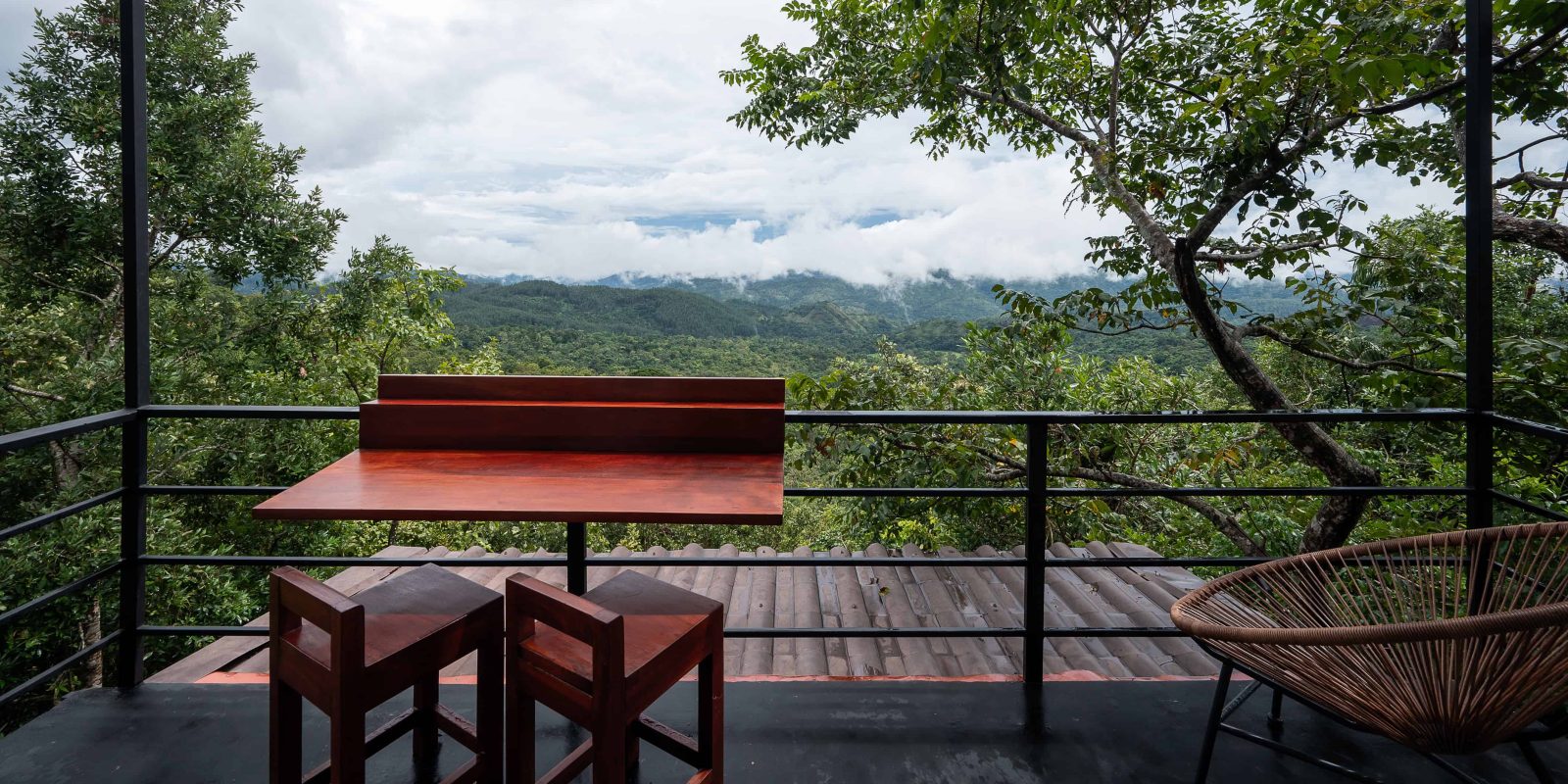
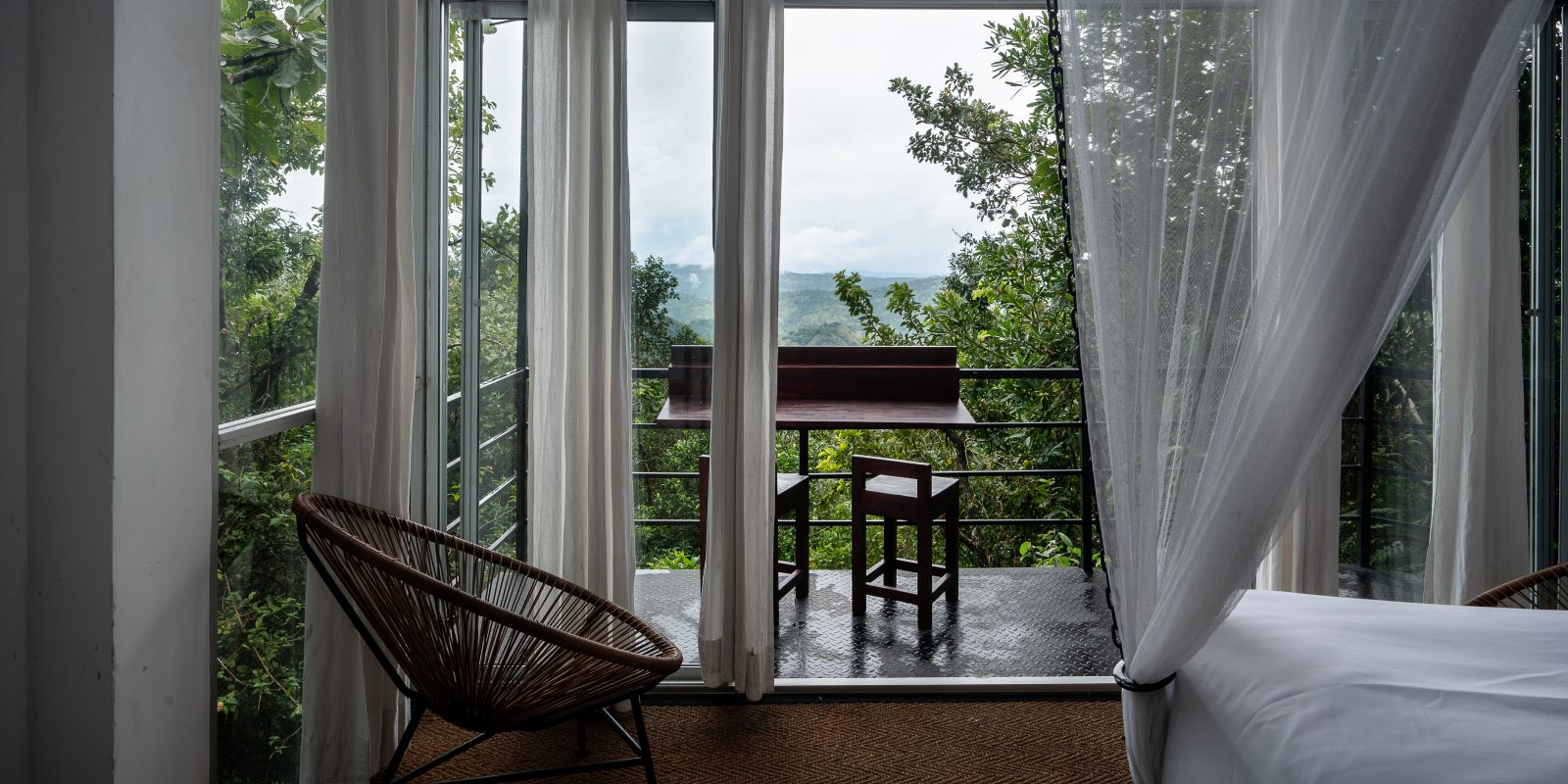
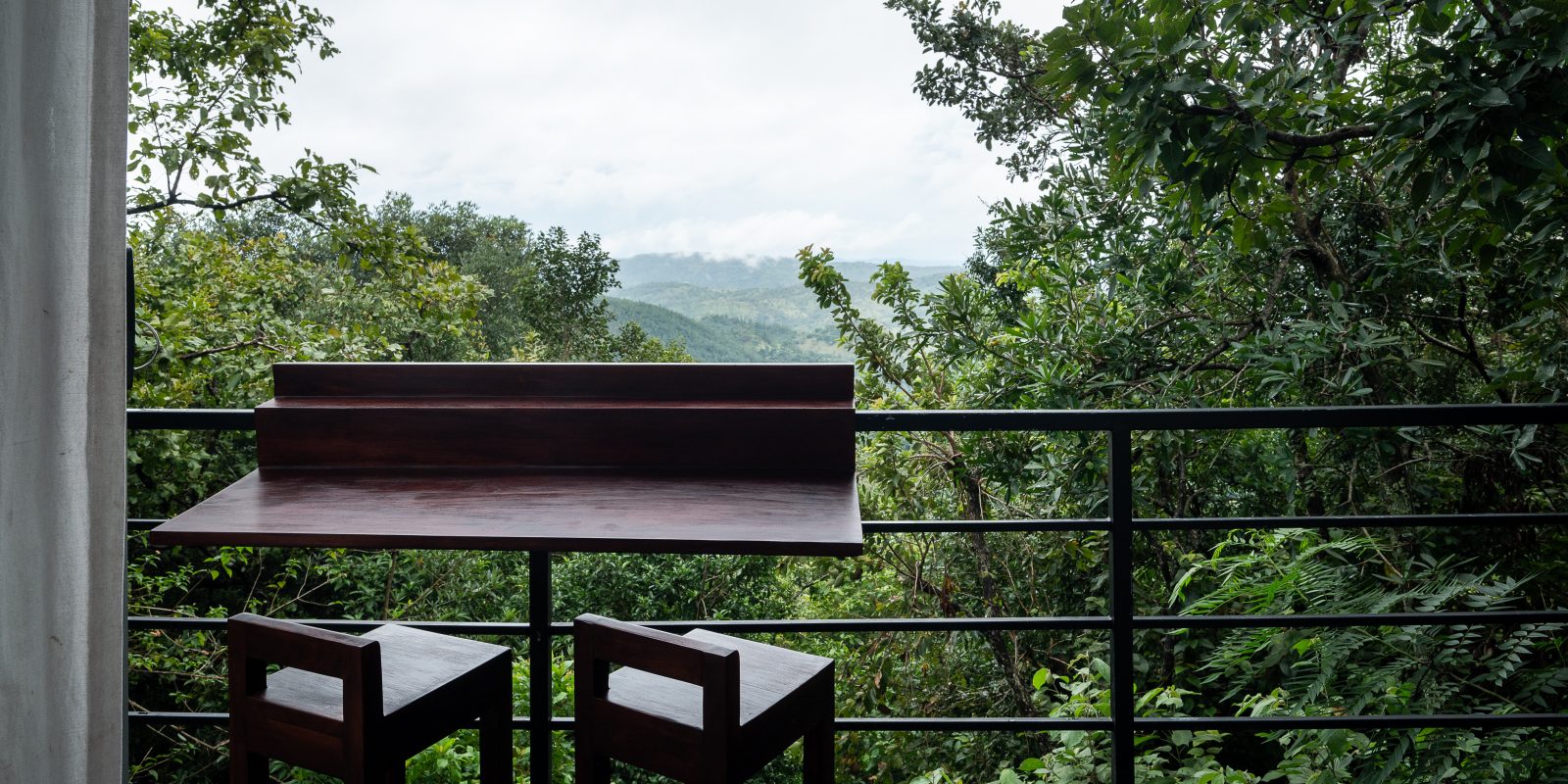
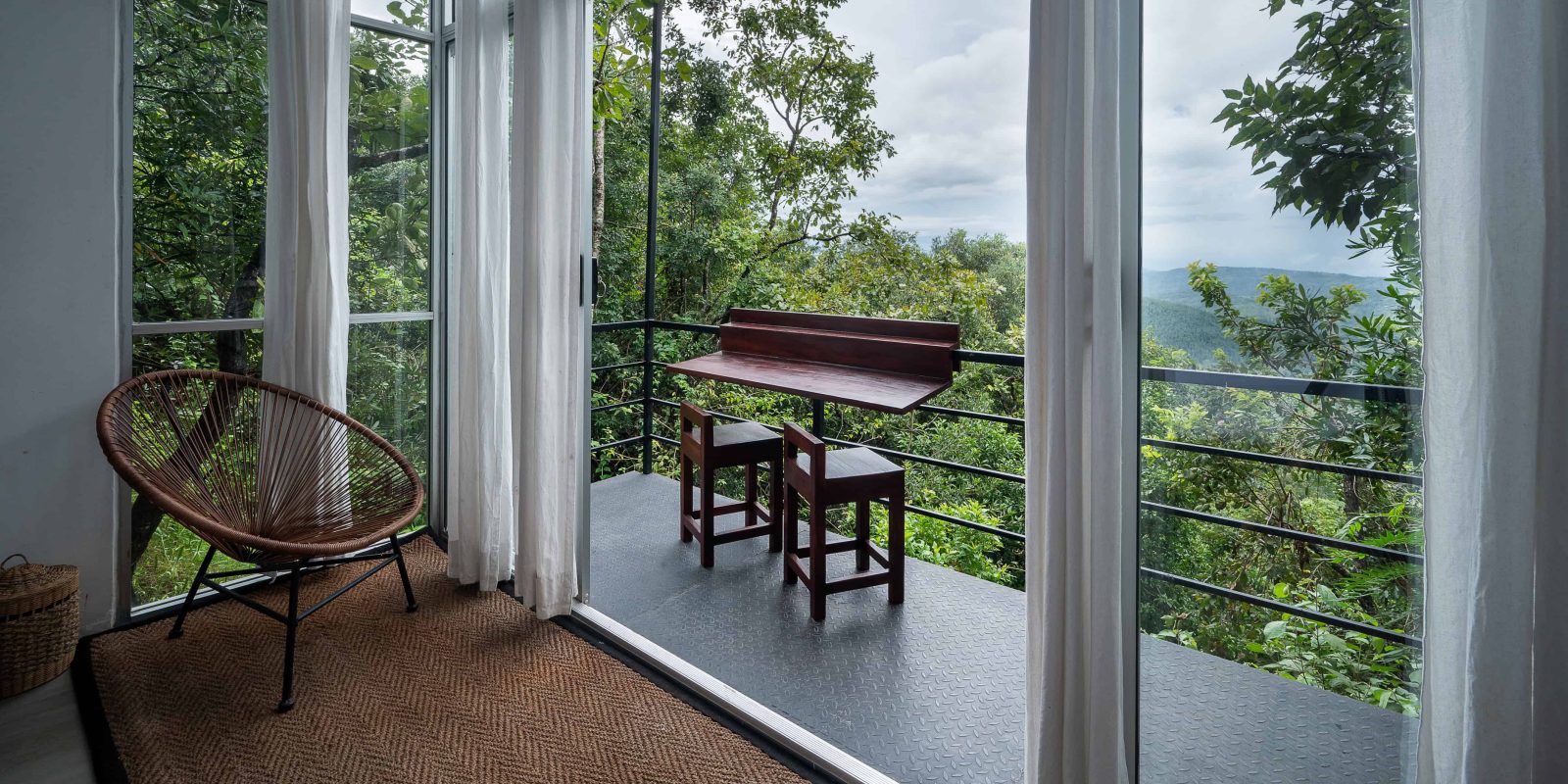
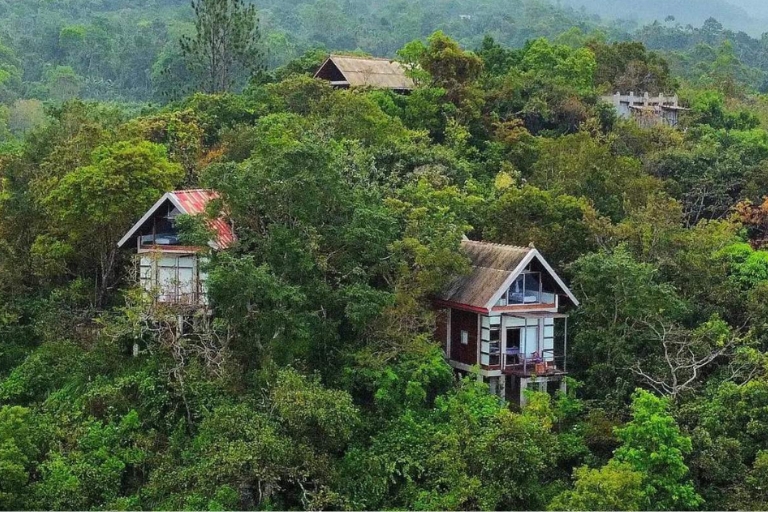
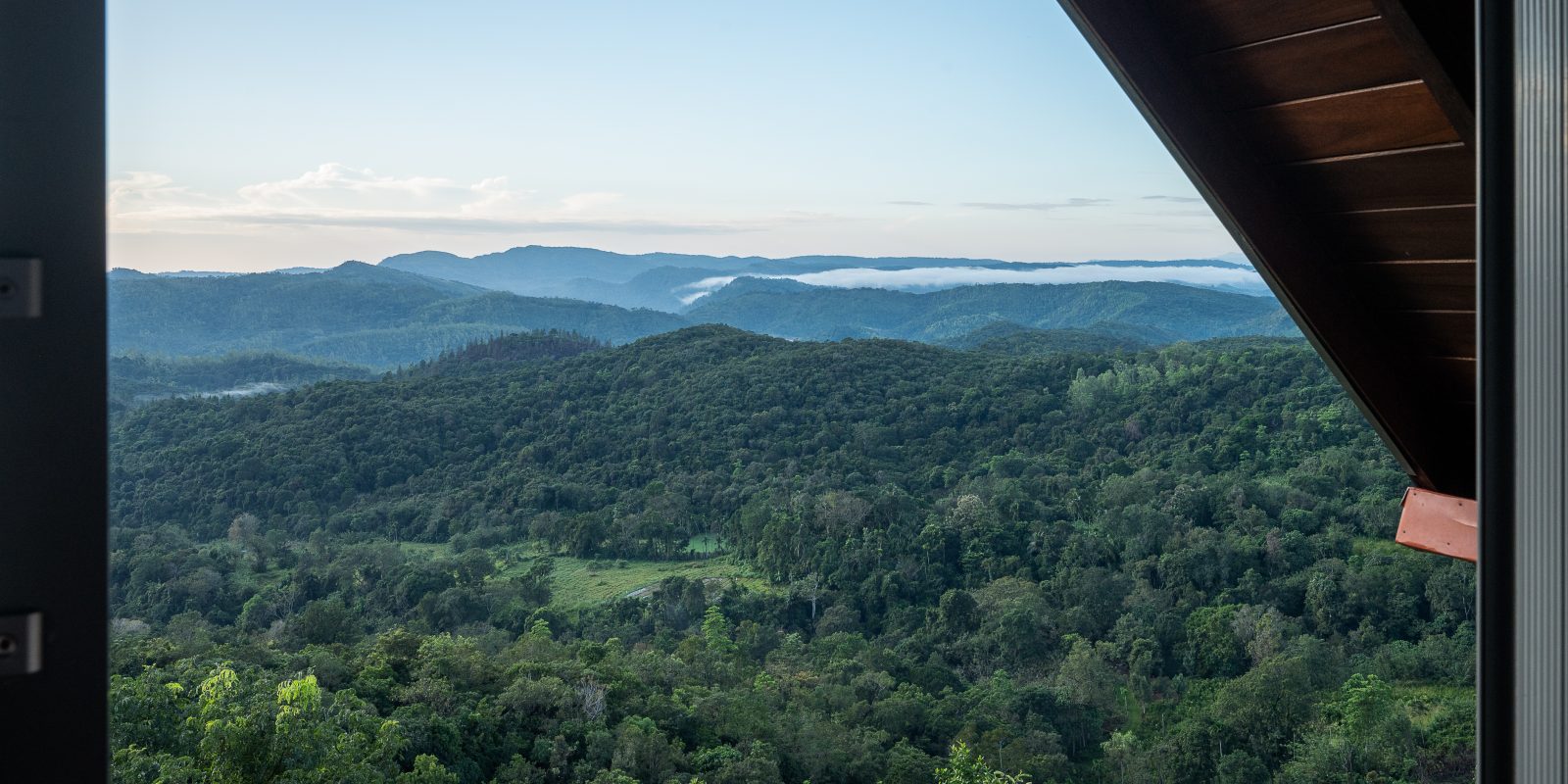
Nestled deep in the heart of Belihuloya, amidst the captivating landscapes, lies Treehouse Chalets—a hidden gem that offers the perfect getaway for nature lovers and people looking for a tranquil setting that is full of lush gardens, fruit trees, and picturesque scenery.

Treehouse Chalets perfectly blends with the natural surroundings, offering a unique accommodation experience. Imagine waking up to the melodies of chirping birds and gentle rustling leaves, as you find yourself surrounded by the beauty of nature. The chalets provide a sense of harmony and tranquillity, allowing guests to truly immerse themselves in the serene ambiance.

Belihul Oya, where Treehouse Chalets is located, is renowned for its majestic waterfalls and captivating landscapes. The area boasts stunning cascades such as Galagama Ella, Bambarakanda Ella, and Brampton Falls, inviting visitors to explore the awe-inspiring beauty of nature. The picturesque scenery of Belihul Oya creates a magical backdrop for those seeking to reconnect with the natural world.

When staying at Treehouse Chalets, guests have the opportunity to indulge in outdoor activities and immerse themselves in the surrounding beauty. Embark on hiking and trekking adventures through scenic trails, witness the vibrant birdlife, and explore the abundant wildlife in the area. For thrill-seekers, the Belihul Oya River offers exhilarating white-water rafting experiences, adding a touch of excitement to your stay.

Treehouse Chalets provides a sanctuary away from the hustle and bustle of city life, allowing guests to unwind and rejuvenate amidst nature’s embrace. The serene rural landscape, the lush gardens, and the picturesque scenery create a truly tranquil ambiance that soothes the soul.

In the heart of Belihuloya, Treehouse Chalets offers a unique and unforgettable experience. Escape to this tranquil location, where the fusion of natural beauty and comfortable accommodations await. Whether you seek adventure, serenity, or simply a connection with nature, Treehouse Chalets provides an idyllic retreat in the heart of Belihul Oya, central Sri Lanka.


A Nature Lover’s Paradise in Sri Lanka, Home to Treehouse Chalets

Nestled deep in the heart of Belihuloya, amidst the captivating landscapes, lies Treehouse Chalets—a hidden gem that offers the perfect getaway for nature lovers and people looking for a tranquil setting that is full of lush gardens, fruit trees, and picturesque scenery.

Treehouse Chalets perfectly blends with the natural surroundings, offering a unique accommodation experience. Imagine waking up to the melodies of chirping birds and gentle rustling leaves, as you find yourself surrounded by the beauty of nature. The chalets provide a sense of harmony and tranquillity, allowing guests to truly immerse themselves in the serene ambiance.

Belihul Oya, where Treehouse Chalets is located, is renowned for its majestic waterfalls and captivating landscapes. The area boasts stunning cascades such as Galagama Ella, Bambarakanda Ella, and Brampton Falls, inviting visitors to explore the awe-inspiring beauty of nature. The picturesque scenery of Belihul Oya creates a magical backdrop for those seeking to reconnect with the natural world.

When staying at Treehouse Chalets, guests have the opportunity to indulge in outdoor activities and immerse themselves in the surrounding beauty. Embark on hiking and trekking adventures through scenic trails, witness the vibrant birdlife, and explore the abundant wildlife in the area. For thrill-seekers, the Belihul Oya River offers exhilarating white-water rafting experiences, adding a touch of excitement to your stay.

Treehouse Chalets provides a sanctuary away from the hustle and bustle of city life, allowing guests to unwind and rejuvenate amidst nature’s embrace. The serene rural landscape, the lush gardens, and the picturesque scenery create a truly tranquil ambiance that soothes the soul.

In the heart of Belihuloya, Treehouse Chalets offers a unique and unforgettable experience. Escape to this tranquil location, where the fusion of natural beauty and comfortable accommodations await. Whether you seek adventure, serenity, or simply a connection with nature, Treehouse Chalets provides an idyllic retreat in the heart of Belihul Oya, central Sri Lanka.